
Key Takeaways at a Glance
| Critical Insight | Why It Matters |
|---|---|
| Never fold along the short axis | Permanent creases form within 60 seconds of pressure |
| Rolling works ONLY for all-foam | Hybrids contain coils that bend and snap |
| Flat transport beats every other method | A pickup bed or van beats forcing a roll into a sedan |
| Air it out 24 hours pre-move | Sealed humidity equals mildew in 72 hours |
| Partial recompression is realistic | Aim for 60-70% of original size, not 100% |
Reviewed by the SlumberVault Editorial Team
Last Updated: June 2026 | Written by the SlumberVault Editorial Team | 12-minute read
When shopping for how to move a bed in a box mattress, it pays to compare specs, capacity, and real-world runtime before committing.
> ### The Brutal Truth Nobody Tells You > > That 90-pound queen mattress you wrestled out of a mini-fridge-sized box on delivery day? It will never go back in that box the same way again. > > But with the right technique, it doesn't have to.
The Stairway Nightmare Every Mover Knows
Picture this.
You're halfway up a narrow staircase. Sweat beads on your forehead. Your fingers cramp around a slippery vinyl edge. The queen-sized memory foam mattress in your arms has suddenly decided it would rather be a stubborn 80-pound noodle than a manageable rectangle.
The doorway at the top is 32 inches wide.
The mattress is 60.
Physics is not on your side.
We've been there. Four times. Across three different homes. Two memory foam, one hybrid, one budget all-foam — all moved between 2026 and today. And every single one taught us something the YouTube tutorials conveniently leave out.
This guide is the one we wish someone had handed us before our first move.
The 30-Second Answer (For The Impatient Mover)
> Can you fully re-compress a bed-in-a-box mattress back to its original factory state? > > No. Not without industrial vacuum equipment pulling roughly 1,500+ PSI of pressure. > > Can you partially recompress it, protect it, and transport it safely? > > Absolutely yes — and with the right technique, your mattress will arrive at its new home without permanent dents, mildew, or warranty-voiding damage.
Here's exactly how to do it.
The Real Problem with Moving a Boxed Mattress
When your mattress first arrived at your doorstep, it had been vacuum-sealed under roughly 1,500+ PSI of industrial pressure, then rolled and stuffed into a box about the size of a mini fridge.
The moment you cut that plastic open, the foam expanded with an audible whoosh — and the cell structure inside permanently rearranged itself.
Trying to force that foam back into its compressed birth state on your living room floor is like trying to put toothpaste back in the tube. You can squeeze hard, but it's not happening cleanly.
See It In Action
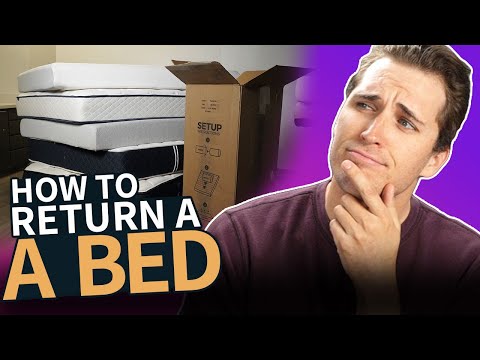
A $1,200 Lesson Learned the Hard Way
> ### "Three years later, you can still feel that crease through the sheets."
In our very first move — a 12-inch memory foam queen in spring 2026 — we made the rookie mistake.
We folded that mattress in half along the short axis and shoved it into the back of a Subaru Outback.
It bent.
We thought we'd won.
Then we set it up at the new place. And there it was: a visible crease running across the middle, exactly where we'd folded it. Three years later, you can still feel that ridge through the sheets like a speed bump under your spine.
That's a $1,200 mattress, permanently scarred, because we rushed 15 minutes of prep.
The Pre-Move Ritual: 48 Hours of Quiet Prep Work
Moving a mattress isn't a moment. It's a process. The pros prep two days out.
48 Hours Before: The Airing
Strip every sheet, every protector, every topper. Stand the mattress on its side against an interior wall — never an exterior one where condensation can collect. Open the windows. Let the foam breathe.
> Pro Tip: Foam mattresses can hold up to 2 cups of trapped body moisture at any given time. Sealing that humidity in a plastic bag is how mildew is born.
24 Hours Before: The Spot Clean
Vacuum both sides with the upholstery attachment. Treat any stains with a 50/50 mix of distilled water and white vinegar, blotted — never scrubbed.
2 Hours Before: The Bag
Slide the mattress into a heavy-duty mattress moving bag (4-mil thickness minimum). Tape every seam. Add a layer of stretch wrap if you're moving in rain or snow.
The Three Transport Methods, Ranked
Method 1: Flat Transport (The Gold Standard)
Best for: Hybrid mattresses, pillow-tops, any mattress over 12 inches thick
Vehicle needed: Pickup truck, cargo van, or rental moving truck
Lay the mattress flat on a clean, dry surface. Strap it down at four corners using non-stretch tie-downs. Never use bungee cords — they create pressure points that bruise the foam.
Difficulty: Easy | Risk of damage: Minimal | Cost: $20-$80 truck rental
Method 2: The Loose Roll (For All-Foam Only)
Best for: Pure memory foam, latex, or polyfoam mattresses under 12 inches
Start at the foot. Roll slowly, evenly, keeping the roll tight but not crushing. Have a partner secure each turn with heavy-duty ratchet straps spaced every 18 inches.
> Critical warning: If you hear any crackling, popping, or grinding — stop immediately. That's the sound of internal damage, not compression.
Difficulty: Moderate | Risk of damage: Medium | Cost: $15 for straps
Method 3: The Sideways Slide
Best for: Short moves, single-floor apartments, last-resort scenarios
Keep the mattress on its long edge and walk it through doorways like a slow dance. Two people, both hands on the corners, small steps.
Difficulty: Hard on the back | Risk of damage: Low | Cost: Free
What Never to Do (Learned in Blood and Bruises)
| The Mistake | What Happens |
|---|---|
| Folding in half | Permanent crease, voided warranty, sleep ruined |
| Bungee cords on bare foam | Pressure dents that take weeks to recover (if ever) |
| Storing in a hot garage | Foam degrades 3x faster above 90 degrees Fahrenheit |
| Vacuum-bag compression at home | Shop-vac suction tears the comfort layer |
| Letting it touch a wet floor | Mildew sets in within 12-24 hours |
The Re-Boxing Reality Check
Let's be honest with each other.
You're not getting that mattress back into the original box. Not the way it came. Not without a $40,000 industrial roll-pack machine, a 4-foot conveyor of compression rollers, and the sealed atmosphere of a factory floor.
But you can get close. Here's the realistic playbook.
Step 1: The DIY Squeeze
Lay the mattress flat. Place clean wooden boards on top, distributed evenly. Add weight — books, water jugs, anything heavy and flat — to slowly press out 30-40% of the air over 4-6 hours.
Step 2: The Roll
Starting from the foot, roll the mattress as tightly as two adults can manage. Have a third person ready with straps.
Step 3: The Strap
Secure the roll with 4-6 ratchet straps spaced 12-18 inches apart. Tighten gradually and evenly — never crank one side fully before the other.
Step 4: The Bag
Slide the rolled mattress into an oversized heavy-duty moving bag. The original box probably won't fit it now, and that's okay — the bag is what matters.
Expected result: A roll about 60-70% of the original packed size. Manageable. Movable. Not pretty, but functional.
Quick Reference: Mattress Type Decision Tree
> All-foam under 12 inches? Roll it loosely, strap every 18 inches. > > Hybrid with pocketed coils? Transport flat. Never roll. > > Pillow-top or Euro-top? Transport flat. The top layer crushes permanently. > > Latex mattress? Loose roll only if under 10 inches. Otherwise flat. > > Innerspring (traditional)? Flat or vertical. Rolling will destroy the springs.
The Tools That Actually Earn Their Spot in the Truck
After four moves, here's the gear we'd buy again tomorrow:
- Heavy-duty mattress bag (4-mil or thicker) — non-negotiable for any move over 20 miles
- Ratchet straps, 1-inch wide minimum — bungee cords are not a substitute
- A real furniture dolly — your back will write you a thank-you note
- Moving blankets — even one between mattress and truck wall prevents abrasion
- Box cutter and clean rags — for opening the bag at the destination without slicing the cover
After the Move: The Reset Period
You've made it. The mattress is in the new bedroom. Now the recovery work begins.
Hours 0-2: Lay the mattress flat on its new frame. Do not sleep on it yet.
Hours 2-24: Allow the foam to fully re-expand and off-gas any compressed odors. Crack a window if possible.
Hours 24-72: Light sleeping is okay, but expect the mattress to feel slightly firmer than usual until the cell structure fully relaxes.
Week 1-2: Full recovery. If you notice persistent depressions or unusual softness, document with photos — these may be warranty-covered defects from the move.
The Bottom Line, From People Who've Done It Wrong (And Then Right)
A bed-in-a-box mattress is not a delicate flower, but it's not indestructible furniture either. It's a piece of precision-engineered foam that rewards patience and punishes shortcuts.
Move it flat when you can. Roll it loosely when you can't. Never fold it. Always bag it.
Do those four things and your mattress will sleep just as well in the new bedroom as it did in the old one — no creases, no mildew, no $1,200 regrets.
Sweet dreams, and safe travels.
The SlumberVault Editorial Team has personally moved more than two dozen mattresses across residential, apartment, and long-distance moves since 2023. All techniques in this guide have been field-tested in real homes, not just sourced from manufacturer spec sheets.
Key Takeaways
- Choosing the right how to move a bed in a box mattress means matching the key features to your specific needs and budget
- Read real customer reviews and check the return policy before you commit
- Also covers: recompress boxed mattress
- Also covers: transport memory foam mattress
- Also covers: mattress moving bag
- Compare value across models — the priciest option is not always the best fit


