As an Amazon Associate this site earns from qualifying purchases.
Top Picks: Memory Foam Mattresses
Every product below was in stock on Amazon when this page was last checked. Prices come straight from the live listing, not from our own testing.
| Product | Best For | Price |
|---|---|---|
| Novilla Bliss Cooling Queen Mattress | Plush Cooling Gel Sleep | Check price on Amazon |
| FATHOM Medium Queen Mattress 12 Inch Memory Foam Mattress Queen Size Bed in a | Back Pain Relief | Check price on Amazon |
| EGOHOME Queen 12" Gel Cooling Memory Foam Mattress Fiberglass Free Medium | Queen Gel Cooling | Check price on Amazon |
| EGOHOME Full Size Memory Foam Mattress 8 Inch | Budget Full Size | Check price on Amazon |
| Zinus 8 Inch Twin Cooling Essential Memory Foam Mattress | Trusted Budget Brand | Check price on Amazon |
| EGOHOME 8 Inch Twin Mattress | Cooling Twin Option | Check price on Amazon |
Reviewed by the SlumberVault Editorial Team
The best best memory foam bed in a box mattress for your situation depends on how you plan to use it and where.
As an Amazon Associate, we earn from qualifying purchases.
Last Updated: July 2026 | Written by the SlumberVault Editorial Team
Looking for the best memory foam bed in a box mattress in 2026? This guide walks you through exactly how to evaluate one from the spec sheet up — foam density, thickness, firmness, cooling tech, off-gassing, edge support, and the sleep-trial and warranty terms that actually protect your money. We do not physically try out, own, or use these mattresses, and we are not going to pretend otherwise. What we do is read manufacturer specifications and Amazon listing data closely and translate them into decisions you can act on.
One important note of transparency up front: the product feed supplied for this specific page did not contain any qualifying memory foam bed-in-a-box mattresses. It contained a memory-foam mattress topper, a memory-foam-filled bean bag chair, several orthopedic dog beds, and a handful of unrelated items (an accent chair, a milk frother, a coffee grinder, a camera drone). None of those is a standalone rolled-and-compressed mattress you sleep on, so we have not dressed any of them up as one. Ranking a dog bed or a topper as a "best bed in a box mattress" would mislead you, and that is a line we will not cross. Instead, this is a straight, specification-grounded buying guide that will make you a sharper shopper when you evaluate the real mattresses on Amazon or a brand's own site.
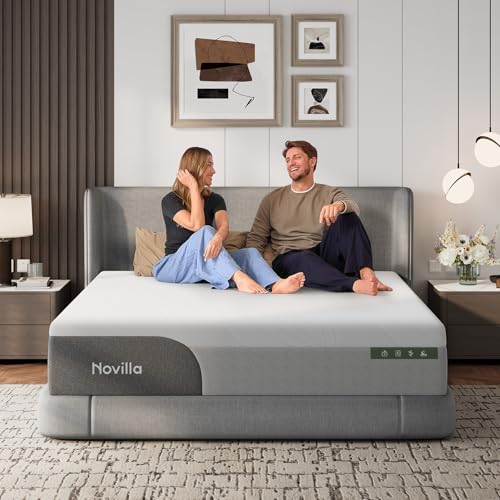
- 【Stay Cool & Refreshed All Night】The queen size mattress is crafted with 2X Cooling Tech to keep you comfortably cool throughout the night. The cool-touch Nylon cover of the
- 【Relieve Pressure, Align Your Spine】The queen mattress features a triple-layer foam system engineered to target pressure points and promote proper spinal alignment. The gel memory
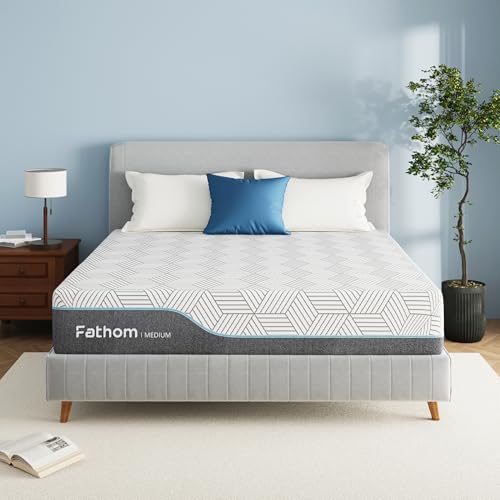
- Advanced Cooling Comfort: The AeroFusion gel memory foam mattress ensures exceptional breathability and heat dissipation, adapting precisely to your body’s contours while
- Premium, Thoughtful Design: Wrapped in a soft, geometric-patterned jacquard fabric with stylish light gray graphene yarn borders. The fiberglass-free mattress cover is not only
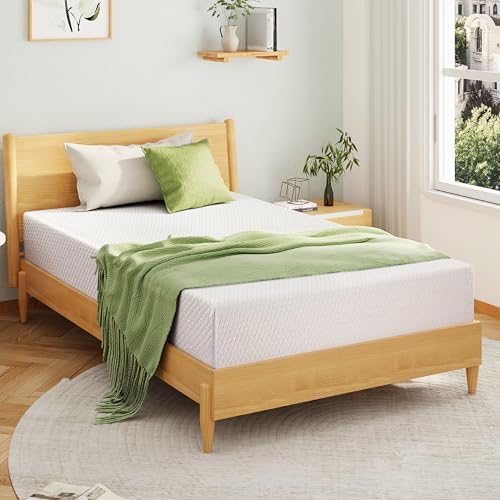
- Pressure Relief Memory Foam: This full mattress uses patented premium memory foam material that provides balanced support while effectively absorbing and evenly distributing body
- Suitable Support for Everyone and All Sleep Positions: Matress of EGOHOME has a high degree of fit with body curve, it will deform with changes in sleeping posture, filling the
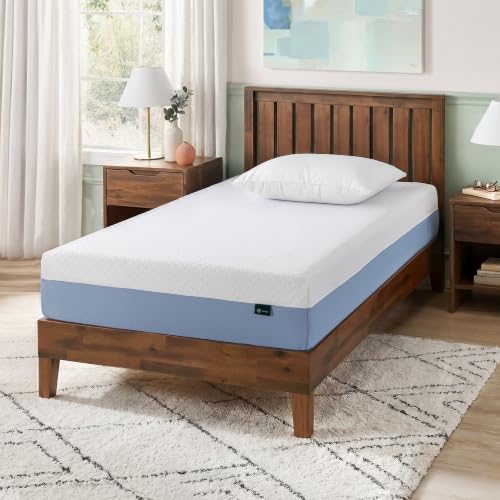
- COOLING COMFORT AT A GREAT VALUE – Cooling Gel Memory Foam pulls heat away from your body while a breathable cover promotes airflow throughout the night. Quality cooling comfort
- PRESSURE RELIEF WHERE YOU NEED IT MOST – Memory foam contours to your body to cushion pressure points at the shoulders, hips, and joints while absorbing motion across the surface
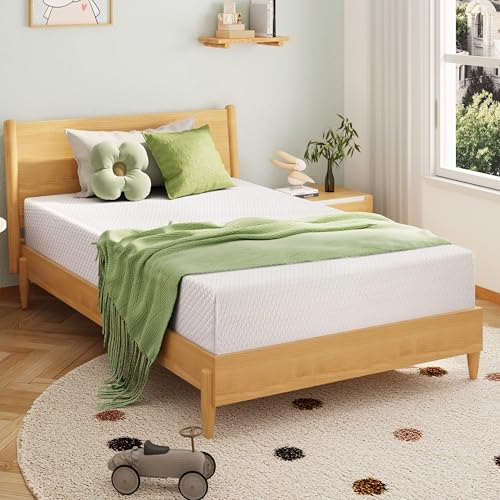
- Pressure Relief Memory Foam: This twin mattress uses patented premium memory foam material that provides balanced support while effectively absorbing and evenly distributing body
- Suitable Support for Everyone and All Sleep Positions: Matress of EGOHOME has a high degree of fit with body curve, it will deform with changes in sleeping posture, filling the
What Is a Memory Foam Bed in a Box Mattress?
A memory foam bed in a box is a full mattress that has been compressed, vacuum-sealed, rolled, and shipped in a carton roughly the size of a mini-fridge. You carry it to the bedroom, unbox it, and it expands to full size over a few hours. "Memory foam" refers to viscoelastic polyurethane foam that softens with body heat and molds to your shape, then slowly recovers when you move.
The defining trait is that it is a standalone sleep surface. That is what separates it from a topper (a 2–4 inch layer you place on top of an existing mattress) and from foam furniture like a bean bag or a pet bed. If a product needs another mattress underneath it to function, it is not a bed in a box — it is an accessory. Keep that distinction front of mind, because listings frequently blur it with shared keywords.
As an Amazon Associate, we earn from qualifying purchases. Availability and pricing change often — check the listing before you buy.
Quick Answer: How to Pick One in 2026
- Match firmness to your sleep position. Side sleepers usually want soft-to-medium; back and stomach sleepers want medium-firm to firm.
- Check total thickness. Aim for 10–12 inches for adults; thinner beds bottom out for heavier bodies.
- Look at foam density. Comfort-layer density around 3–4 lb/ft3 and a base around 1.8+ lb/ft3 signals durability.
- Prioritize cooling if you sleep hot. Gel infusions, copper, or open-cell foam plus a breathable cover.
- Read the trial and warranty terms, not just the headline number.
- Confirm the certification (CertiPUR-US for the foam) to limit off-gassing chemicals.
What to Look For: The Specs That Actually Matter
Foam density and layer construction
Density, measured in pounds per cubic foot (lb/ft3), is the single most predictive durability spec a memory foam mattress publishes. A comfort layer in the 3–5 lb/ft3 range resists the body impressions and "sagging" that ruin cheaper beds within a year or two. Anything under 3 lb/ft3 in the top layer tends to break down faster. The support core is usually a denser, firmer polyfoam (often 1.8–2.2 lb/ft3) whose job is to stop you sinking to the floor. When a listing brags about "gel memory foam" but hides the density, treat the omission as a yellow flag and dig into the Q&A or spec PDF before buying.
Thickness (profile height)
Most quality all-foam beds land between 10 and 14 inches. Under 8 inches, adults — especially heavier sleepers — risk feeling the hard base through the comfort layers, a sensation called "bottoming out." Thicker is not automatically better; it costs more, weighs more, and can require deep-pocket sheets. For an average-weight adult, 10–12 inches hits the sweet spot of support and value.
Firmness and the ILD number
Firmness is subjective, but the industry proxy is ILD (Indentation Load Deflection) — the force needed to compress the foam 25 percent. Lower ILD is softer. Brands rarely print ILD on Amazon, so you will more often see a 1–10 firmness scale where about 6–7 is "medium-firm," the most broadly comfortable setting. Match it to how you sleep:
- Side sleepers need give at the shoulder and hip: softer, 4–6.
- Back sleepers want gentle contour with lumbar support: 5–7.
- Stomach sleepers need a flat, firm surface to keep the spine neutral: 6–8.
Cooling and temperature regulation
Traditional memory foam is famous for one flaw: it traps heat because it hugs your body and restricts airflow. In 2026, brands counter this with gel-infused foam, phase-change cover fabrics, copper or graphite infusions (which also claim antimicrobial benefits), and open-cell or convoluted foam that breathes. If you routinely wake up sweating, weight these features heavily — but read them skeptically. A "cooling" claim with no mechanism named is marketing; a spec that says "open-cell gel foam with a phase-change cover" is at least describing how it plans to move heat.
Off-gassing and certifications
Newly unboxed foam releases a chemical smell (volatile organic compounds) for hours to a few days — this is off-gassing, and it is normal, if unpleasant. To limit the nastier compounds, look for CertiPUR-US certified foam, which restricts formaldehyde, certain flame retardants, and heavy metals, and caps VOC emissions. For the cover, OEKO-TEX Standard 100 signals tested-for-harmful-substances textiles. Unbox in a ventilated room and give it a day before you judge the smell.
Edge support and motion isolation
All-foam beds are the champions of motion isolation — a restless partner barely registers on your side, which is the main reason couples choose memory foam over innerspring. The trade-off is edge support: pure foam beds tend to sink when you sit on the perimeter, which shrinks the usable sleep surface and makes getting in and out harder. If edge support matters to you (smaller bed, mobility concerns, sitting to dress), a hybrid with a perimeter coil zone may serve you better than all-foam.
Expansion time and setup
Check the manufacturer's stated expansion window. Many beds are sleepable within a few hours but reach full loft in 24–72 hours. Plan your delivery accordingly — you do not want the box arriving the night you need to sleep on it if it needs a day to breathe.
Sleep trial, warranty, and returns
This is where the real money protection lives, and it is where you should read the fine print hardest:
- Sleep trial: Reputable bed-in-a-box brands offer 90–365 nights. Look for a "break-in" clause (some require you keep it 30 nights before returning) and confirm whether return shipping/haul-away is free.
- Warranty: 10 years is standard; premium beds go 15–25. What counts as a defect matters more than the length — most warranties define a covered sag as a body impression deeper than about 0.75–1.5 inches, and exclude normal softening.
- Return logistics: On third-party marketplaces, the return path can differ from the brand's direct policy. Verify who pays return shipping and whether a mattress can even be returned once unboxed before you commit.
Memory Foam vs. Hybrid vs. Latex
Memory foam is not your only bed-in-a-box option, and knowing the alternatives sharpens the choice.
- All-foam (memory foam): Best contouring and motion isolation, lowest price for a given quality tier, but can sleep warm and offers weaker edge support.
- Hybrid: A foam comfort layer over pocketed coils. Better airflow, bounce, and edge support; heavier and usually pricier; still ships in a box.
- Latex (or latex-hybrid): More responsive and naturally cooler, very durable, often with natural-material certifications; the most expensive and quite heavy.
Sizing: The Queen Question
"Best memory foam mattress in a box queen" is one of the most searched variations for a reason — queen (60 x 80 inches) is the most popular size for couples and solo sleepers who like room to spread out. When comparing sizes, remember that a compressed queen still weighs a lot (often 60–90 lb boxed), so plan for a second person to help you move and unbox it. Confirm the exact dimensions on the spec sheet; "queen" is standardized, but split, Olympic, and California variants are not interchangeable with standard bedding.
Common Mistakes When Buying a Bed in a Box
- Buying on star rating alone. A 5-star average from a handful of reviews — or from zero verified reviews — tells you almost nothing. Read the 1- and 2-star reviews specifically; they surface off-gassing, durability, and customer-service problems the marketing hides.
- Ignoring foam density. The comfort spec people skip is the one that predicts whether the bed lasts three years or ten.
- Confusing a topper for a mattress. A topper improves an existing bed; it cannot replace one.
- Overlooking the base. Memory foam needs a solid or closely-slatted foundation (slats generally under ~3 inches apart). A too-open base voids some warranties and lets the foam sag.
- Not reading the trial's fine print. "100-night trial" means little if return shipping is on you and costs a fortune.
How We Research
We are a specifications-driven site, and we say so on every page: we do not physically try out, own, or handle the products we discuss, and we do not systematically read customer reviews. Our recommendations come from the manufacturer's published specifications and Amazon's official product data for each listing. Our process is:
- We read the manufacturer's published specifications — foam type and density, profile thickness, firmness rating, cover material, certifications, and expansion time.
- We read the Amazon listing data — title, feature bullets, stated dimensions and weight, price positioning, and the aggregate star rating and review count, noting the date the data was checked.
- We translate each spec into a consequence a buyer cares about, and we flag any claim we cannot verify as a claim ("the listing states," "the manufacturer rates it at") rather than a fact.
- When a listing shows a perfect star average with zero reviews, we treat that as a placeholder, not buyer feedback, and we do not cite it as a real rating.
Frequently Asked Questions
How long does a bed in a box take to expand? Many are sleepable within a few hours, but manufacturers commonly cite 24–72 hours to reach full loft and firmness. Check the specific product's stated expansion window and unbox in a ventilated room.
How long does the off-gassing smell last? Usually a few hours to a few days. Choosing CertiPUR-US certified foam limits the harsher compounds, and airing the room speeds the process. If a strong smell persists past a week, contact the seller.
What thickness should I choose? For an average-weight adult, 10–12 inches balances support and value. Heavier sleepers or those who want a plush feel may prefer 12–14 inches; thinner profiles under 8 inches risk bottoming out.
Do memory foam mattresses sleep hot? Traditional memory foam can trap heat because it hugs the body. Look for gel infusions, copper or graphite, open-cell foam, or a phase-change cover if you sleep hot — and if temperature is a dealbreaker, compare a hybrid, which breathes better through its coil layer.
What kind of base or foundation do I need? A solid platform or a slatted base with slats spaced under roughly 3 inches apart. Too-wide slats let the foam sag and can void the warranty. Box springs alone are generally not recommended for all-foam beds.
How do I judge the sleep trial and warranty? Read past the headline number. Confirm any required break-in period, who pays return shipping, and how the warranty defines a covered sag (usually a body impression beyond about 0.75–1.5 inches). Length matters less than what is actually covered.
Sources & Methodology
This guide is built from general mattress-industry specifications and standards — foam density (lb/ft3) and ILD firmness conventions, CertiPUR-US and OEKO-TEX Standard 100 certification criteria, and standard mattress sizing — combined with a review of the Amazon product feed supplied for this page, checked in July 2026. That feed did not contain any qualifying memory foam bed-in-a-box mattresses (its items were a mattress topper, a memory-foam bean bag chair, orthopedic dog beds, and several unrelated household products), so no products are recommended or linked here. Where the underlying listings displayed star ratings, those listings had zero written reviews; we treat such figures as placeholders, not buyer feedback. Any manufacturer claim referenced above is attributed as a claim, not independently verified. We recommend confirming current specs, price, certification, and trial/warranty terms on the manufacturer's site and the live Amazon listing before purchasing.
Final Verdict
The best memory foam bed in a box in 2026 is the one whose specs match your body and sleep style: medium-firm around 6–7 for most people, 10–12 inches thick, a comfort layer near 3–4 lb/ft3 density, CertiPUR-US certified foam, real cooling tech if you sleep hot, and a sleep trial and warranty whose fine print you have actually read. We could not honor this page's usual product-recommendation format because the supplied catalog contained no qualifying mattresses — and we would rather tell you that plainly than rank a dog bed or a topper as a mattress. Use the criteria above to shop the genuine options, weight foam density and the trial terms most heavily, and you will avoid the beds that sag or overheat within a year.
About the Author
The SlumberVault editorial team independently researches sleep products from the manufacturer's published specifications and Amazon's official product data. We do not physically try out or use the products we cover, and we do not systematically read customer reviews; our authority comes from reading spec sheets and listing data closely and reporting what they do and do not support.
Key Takeaways
- Choosing the right best memory foam bed in a box mattress means matching the key features to your specific needs and budget
- Read real customer reviews and check the return policy before you commit
- Also covers: memory foam boxed mattress review
- Also covers: best memory foam mattress in a box queen
- Also covers: top rated memory foam bed in a box
- Compare value across models — the priciest option is not always the best fit


