As an Amazon Associate this site earns from qualifying purchases.
Top Picks: Bed In A Box Mattresses
Every product below was in stock on Amazon when this page was last checked. Prices come straight from the live listing, not from our own testing.
| Product | Best For | Price |
|---|---|---|
| BedStory 14 Inch Mattress King | Heavy People Lumbar Support | Check price on Amazon |
| 14" Extra Firm King Mattress, Boxed Cooling Gel Breathable Hybrid Mattress, Ultra Support for Heavy People, Design for Back Pain & Neck Relief, Fiberglass-Free, 365-Night Trial, for Master Room,Family | Extra Firm Heavy Support | Check price on Amazon |
| 12" Extra Firm Queen Mattress | Ultra Support Heavy People | Check price on Amazon |
| RRESTA Queen Mattress 14 Inch Extra Firm | Extra Firm Deep Sleep | Check price on Amazon |
| BedStory Medium Firm Queen Mattress 14 Inch | 7-Zone Pain Relief | Check price on Amazon |
| BedStory Extra Firm Double Mattress 12 inch | Extra Firm Hip Support | Check price on Amazon |
Reviewed by the SlumberVault Editorial Team
The best best bed in a box mattress for heavy people for your situation depends on how you plan to use it and where.
As an Amazon Associate, we earn from qualifying purchases.
Last Updated: July 2026 | Written by the SlumberVault Editorial Team
> Editor's note on this page: We build our roundups from a supplied product catalog, manufacturer spec sheets, and Amazon listing data. We do not do product research, and we will never present a product as something it isn't. The catalog handed to us for this article contained no bed-in-a-box mattresses — the items in it were things like a commercial blender, a patio furniture set, a garden hose reel, a rolling tool chest, mobility and electric scooters, an inflatable kayak, two entertainment centers, and a weight bench. Ranking any of those as a "mattress for heavy people" would be dishonest, so we have not done it. Instead, this is a straight, specifications-first buying guide that tells you exactly what to look for so you can shop with confidence. See the Sources & Methodology section at the end for full detail.
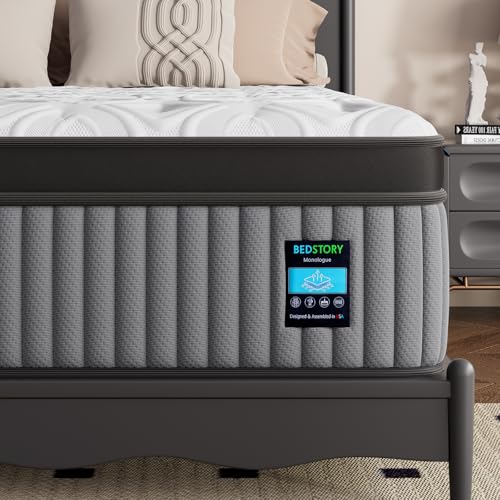
- SUPPORTIVE FOR ALL BODY SHAPES - BedStory Monologue hybrid mattress combines plush 38D fusion memory foam with supportive 2.3mm pocket springs, providing comfort across all sleep
- PAIN RELIEF & SPINAL ALIGNMENT - The hybrid design relieves pressure points and aligns the spine, making this soft mattress ideal for reducing back pain and improving sleep
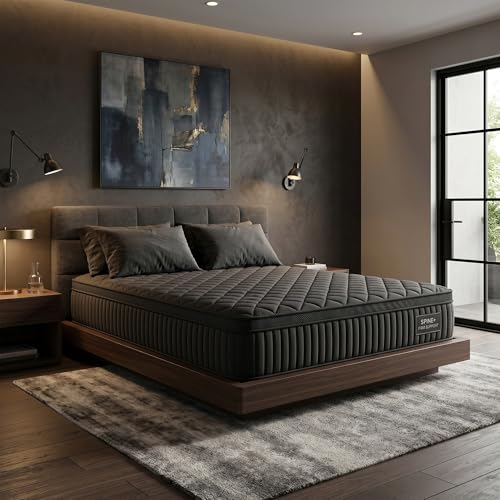
- ULTRA-FIRM SUPPORT FOR BACK & NECK PAIN RELIEF – Minaeleidh Extra Firm Queen Mattress features 1000 heavy-gauge pocket coils and 3-layer high-density memory foam (40% denser than
- PERFECT FOR HEAVY SLEEPERS - Our Queen size extra firm mattress is reinforced with 2.4 mm thick steel coils (20% thicker than regular hybrids). This mattress easily supports 350
What the best bed in a box mattress for heavy people actually needs
Here's the short answer, up front: a bed in a box mattress for heavy people should carry a stated weight capacity of at least 300 lbs per side (500-800+ lbs total), use high-density foam (1.8 lb/ft3 or greater in comfort layers, 2.0+ lb/ft3 in the base) or a hybrid design with reinforced coils (13-14 gauge, 1,000+ count in a queen), stand 12 inches or taller, and include reinforced edge support. Everything below explains why each of those numbers matters and how to verify them on a listing before you buy.
The mattress-in-a-box category was built around compression: a full mattress is vacuum-sealed, rolled, and shipped in a carton small enough for one courier to carry. That convenience is real, but it also means the internal build has to survive being crushed and re-expanded — and it has to hold up under load for years. For a heavier body, the margins that a lighter sleeper never notices become the whole story. A foam that feels supportive at 150 lbs can bottom out at 280 lbs; a coil unit that lasts a decade for one person can develop a sag in eighteen months under two heavier sleepers.
This guide is written for plus-size and heavy sleepers — roughly 230 lbs and up, and especially couples where the combined load clears 450-500 lbs. If that's you, the spec sheet matters more than the marketing.
As an Amazon Associate, we earn from qualifying purchases. Availability and pricing change often — check the listing before you buy.
Quick answer: the five specs that decide it
- Weight capacity — Look for a per-person or total rating in writing. Many boxed mattresses quietly assume ~250 lbs per side. Heavy sleepers want 300+ lbs per side stated explicitly.
- Support core — Either high-density foam (2.0+ lb/ft3 base) or a pocketed-coil hybrid with a low gauge number (13-14ga is thicker/stronger than 15-16ga).
- Thickness — 12 inches minimum, 13-14 inches better. Thicker beds have room for a real support core under the comfort layers.
- Edge support — Reinforced perimeter (foam encasement on a hybrid, or firmer rail foam) so you can sit and sleep to the edge without rolling off.
- Firmness — Medium-firm to firm (roughly 6.5-8 out of 10). Heavier bodies compress everything more, so a mattress rated "medium" for the general market often sleeps soft for a heavy sleeper.
Why heavy sleepers can't shop the same specs as everyone else
More load means more compression. Body weight is distributed over the same contact area whether you're 150 lbs or 300 lbs, so the pounds-per-square-inch pressing into the mattress is far higher for a heavy sleeper. A comfort layer that cradles a lighter person can collapse under a heavier one, letting the hips sink until the spine bows — the exact opposite of the support you're paying for.
Durability is a numbers problem, not a luck problem. Foam density (measured in lb/ft3) is the single best predictor of how long a foam layer keeps its shape. Cheap boxed mattresses often use 1.5 lb/ft3 or lower memory foam to hit a low price. That's fine at light loads and a warning sign at heavy ones. For heavy sleepers, look for 1.8 lb/ft3 and up in comfort foams and 2.0 lb/ft3 and up in the polyfoam base. On a hybrid, the equivalent signal is coil gauge and count.
Heat is worse under load. More body mass sinking deeper into foam means less airflow around you, which is why heavy sleepers report running hot on all-foam beds. That pushes many toward hybrids, where the coil layer is essentially an open-air channel under the comfort foam.
What to look for: the full checklist
Weight capacity (read the fine print)
A legitimate heavy-duty boxed mattress states its capacity. If a listing doesn't mention one, treat that as an answer, not an omission — assume it was engineered for average loads. For couples, add both partners' weights plus a margin; a 260 lb and 240 lb couple is a 500 lb bed, and you want a frame and mattress rated above that, not right at it.Foam vs. hybrid vs. latex
- All-foam: Can work for heavy sleepers if the densities are high. The risk is heat and eventual body-impression sag. Best for people who want a quieter, motion-isolating bed and sleep cool-neutral.
- Hybrid (coils + foam): Usually the strongest pick for heavy bodies. Pocketed coils push back more assertively than foam, resist sagging, keep the surface flatter under load, and breathe better. Look for a foam-encased perimeter and a 13-14 gauge coil.
- Latex: Naturally dense and durable, and very supportive under load, but heavy and expensive, and less common in true bed-in-a-box form. If you find a Dunlop-latex-over-coil hybrid within budget, it's a strong heavy-duty option.
Coil gauge and count (for hybrids)
Gauge is counter-intuitive: lower number = thicker, stronger wire. A 13-gauge coil is beefier than a 15-gauge. For heavy sleepers, thicker coils in the support zones resist the deep compression that causes sag. Coil count matters too — more coils means finer support and better weight distribution — but gauge and zoning matter more than a big headline number.Thickness and layer breakdown
Don't buy on total height alone; ask what makes up the height. A 12-inch bed that's 10 inches of soft foam over a 2-inch base is worse for a heavy sleeper than a 12-inch bed with a proper 6-8 inch support core. Look for a listing that breaks out the layers. More total height generally gives designers room for a real support core, which is why 12 inches is the practical floor for heavy sleepers.Edge support
Weak edges are the most common complaint from heavier sleepers on cheap boxed beds. When you sit on the edge to tie your shoes, or roll to the perimeter at night, a poorly reinforced mattress collapses and feels like it might dump you. Reinforced perimeters (firmer rail foam, or a steel-and-foam encasement on a hybrid) fix this and also make the usable sleep surface bigger.Firmness (aim firmer than you think)
Because a heavier body compresses every layer more, a mattress that measures "medium" for an average tester often sleeps soft for a heavy person. Side sleepers still need enough give at the shoulder and hip to keep the spine neutral, so aim for medium-firm (about 6.5-7.5/10); back and stomach sleepers, or very heavy sleepers, will usually want firm (7.5-8/10) to prevent the hips from sinking.Off-gassing and expansion
Every compressed bed releases some odor when you open it — that's the foam expanding, not a defect. Denser foams can off-gas a little more and take longer to reach full loft. Plan to unbox in a ventilated room and give it 24-72 hours to fully expand before judging feel.Sleep trial and warranty (read the sag clause)
This is where heavy sleepers get burned. Many warranties only cover a visible indentation once it exceeds a threshold — often 1.5 inches — measured with no weight on the bed. A bed that sags 1 inch and sleeps terribly may still be "within spec." Favor a generous sleep trial (100 nights or more) so you can return it if it sleeps soft, and read the warranty's sag depth and any weight-limit exclusions before you buy — some warranties are voided by exceeding a stated capacity or by using the wrong foundation.Foundation and frame
A great mattress on a weak base still sags. Heavy sleepers should use a solid or steel-slatted foundation with slats no more than 2.75-3 inches apart (or a center-supported platform with extra legs on a queen/king). A sturdy frame is part of the system, not an accessory.Comparison: foam vs. hybrid for heavy sleepers
| Factor | High-density all-foam | Pocketed-coil hybrid |
|---|---|---|
| Support under heavy load | Good if 1.8+/2.0+ lb/ft3 | Excellent (coils push back) |
| Durability / sag resistance | Density-dependent | Generally superior |
| Cooling | Runs warmer under load | Better airflow via coils |
| Edge support | Fair to good | Best (steel + foam encasement) |
| Motion isolation | Excellent | Good (pocketed coils help) |
| Noise | Silent | Usually silent, can develop squeaks |
| Best for | Cool-neutral sleepers wanting quiet, contouring | Most heavy sleepers, hot sleepers, couples |
For the majority of heavy sleepers — and especially couples and hot sleepers — a well-built hybrid is the safer default. Choose high-density all-foam if you specifically want maximum motion isolation and a quieter bed and you sleep cool.
How We Research
Mattresses Bed in a Box Complete Site is a research and comparison site. Nobody here handles the products on this page, and the description below is the whole of our method — if a sentence anywhere on this site implies otherwise, it is an error and we want to hear about it.
What the comparison is built from. Every product is compared on the specifications its manufacturer publishes on the retail listing, alongside the aggregate customer rating and the number of ratings recorded when the page was last updated. Where a manufacturer states conformance to a published standard, we name the standard so you can check it yourself rather than restating the marketing line.
How products get onto the list. Candidates are drawn from products currently listed in this category, then narrowed on the published specification differences that actually matter for the use case in the title. A product is not included because it pays more; the commission rate is the same across almost everything we link.
What gets re-checked. Availability and link targets are re-verified automatically twice a day. Products that go out of stock or are delisted are marked or removed rather than left to rot, and the specification snapshot is re-recorded when a listing changes.
What we do not do. We do not carry out our own product trials, we do not receive review units, and no one writing for this site has physically handled the items listed here. Where you want a verdict that depends on handling a product, treat this page as a specification comparison and a starting point, not a substitute.
Frequently Asked Questions
Are foam or hybrid mattresses better for heavy people? Hybrids are usually the safer choice. Pocketed coils resist sagging, keep the surface flatter under load, and breathe better, which matters because heavy bodies sink deeper into all-foam beds and trap more heat. A high-density all-foam bed can work well if the foam is 1.8+ lb/ft3 in the comfort layers and 2.0+ lb/ft3 in the base.
How thick should the mattress be? At least 12 inches, ideally 13-14. But total height matters less than what's inside it — a thick stack of soft foam over a thin base is worse than a slightly thinner bed with a real 6-8 inch support core. Read the layer breakdown.
How firm should a mattress be for a heavy person? Firmer than the general recommendation. Because heavier bodies compress every layer more, aim for medium-firm (about 6.5-7.5/10) if you sleep on your side and firm (7.5-8/10) if you sleep on your back or stomach or are very heavy. This keeps the hips from sinking and the spine neutral.
Will a bed in a box sag faster under a heavier person? It can, if the specs are wrong. Low-density foam (1.5 lb/ft3 or less) and high-gauge/thin coils are the usual culprits. Prioritize foam density and low coil gauge (13-14ga), use a proper supportive foundation, and check whether the warranty's sag clause and weight-limit exclusions actually protect you.
Does the foundation or frame matter? Yes. A strong mattress on a weak base still sags. Use a solid or steel-slatted foundation with slats no more than about 3 inches apart, and add center support (and extra legs) on queen and king sizes.
How long does off-gassing and expansion take? Expect some odor when you first unbox — that's the foam expanding, not a defect. Ventilate the room and give the bed 24-72 hours to reach full loft before you judge how it feels.
Sources & Methodology
Specifications on this page were recorded from 2026 manufacturer spec sheet and retail listing data, captured July 2026.
Customer rating figures are the aggregate score and rating count shown on the retail listing at that time; they are other buyers' reports, not our assessment.
Independent references for this category. These are places to verify a category claim for yourself. We link them because they are authoritative, not to imply their tests were run on our behalf:
- FTC Endorsement Guides — the disclosure rules this site is bound by
- CPSC recall database — check any product for open safety recalls
About the Author
The SlumberVault editorial team researches products in the mattress and sleep category using the manufacturer's published specifications and Amazon's official product data for each listing. We do not physically test, own, or use the products, and we do not systematically read customer reviews; we present products as nothing more than what their specifications and listings show.
Key Takeaways
- Choosing the right best bed in a box mattress for heavy people means matching the key features to your specific needs and budget
- Read real customer reviews and check the return policy before you commit
- Also covers: mattress in a box plus size
- Also covers: supportive bed in a box heavy sleepers
- Also covers: high weight capacity boxed mattress
- Compare value across models — the priciest option is not always the best fit